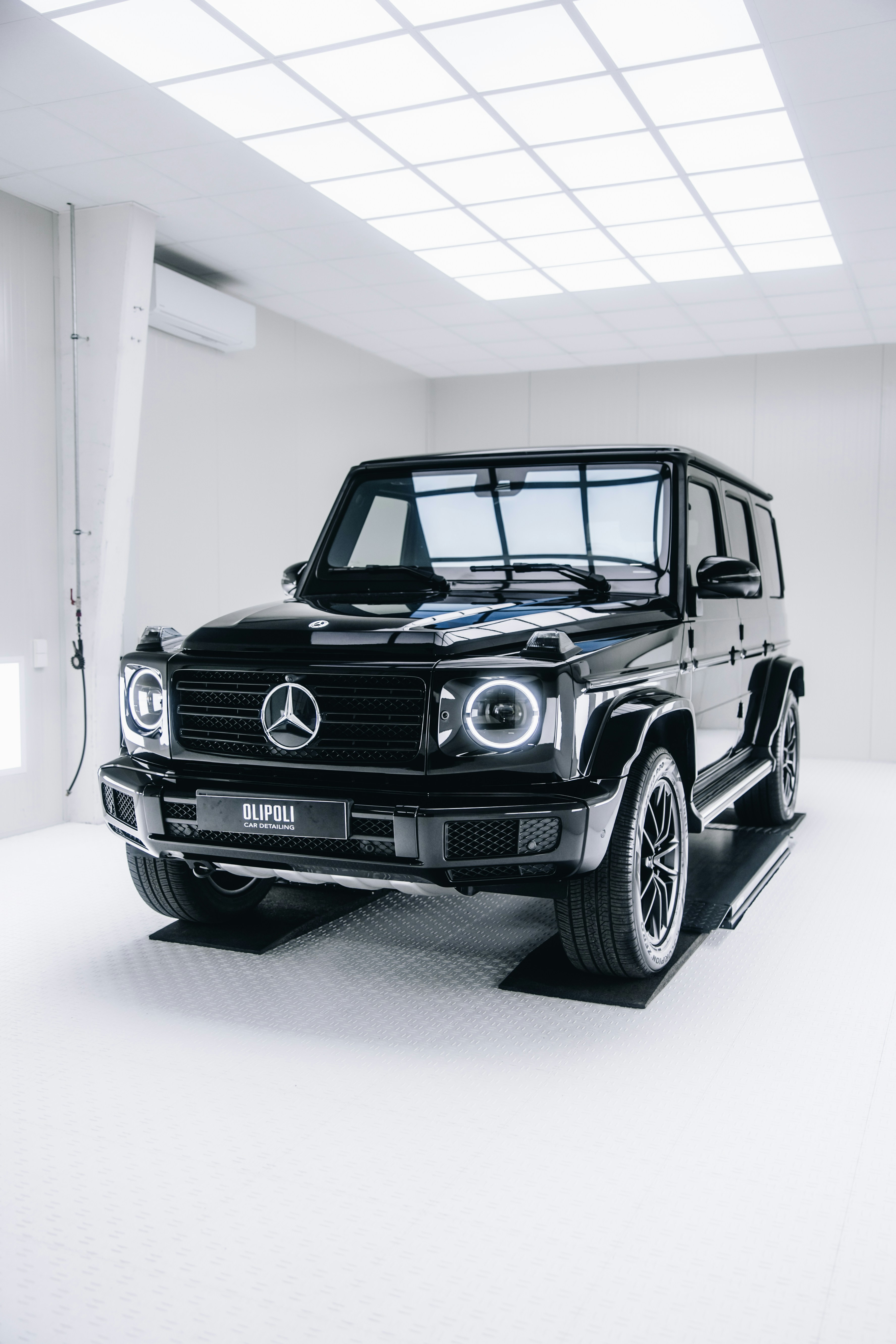
The Allure of the Mercedes G-Wagon
The Mercedes G-Wagon, officially known as the Mercedes-Benz G-Class, has achieved legendary status within the automotive world. This luxury sport utility vehicle (SUV) combines rugged off-road capabilities with a level of luxury and design that is often compared to high-end sedans. First launched in 1979 for military use, the G-Wagon has since evolved into a symbol of sophistication and performance, admired by enthusiasts and celebrities alike.
One of the defining features of the G-Wagon is its distinctive boxy silhouette, which sets it apart from other SUVs. This design not only reflects its utilitarian roots but also contributes to its timeless appeal. The G-Class has continuously evolved over the years, incorporating modern design elements while maintaining its iconic shape, thus ensuring it remains instantly recognizable on the road.
Its interior is a masterclass in luxury, featuring premium materials, modern technology, and meticulous craftsmanship. The G-Wagon boasts an array of advanced driving aids, infotainment options, and comfort features that provide a driving experience comparable to traditional luxury vehicles. This exceptional combination of ruggedness and refinement allows the G-Wagon to seamlessly transition from an off-road adventure to a night out in the city.
Moreover, this vehicle’s robust performance capabilities reinforce its standing as an elite SUV. Equipped with powerful engines and a sophisticated all-wheel-drive system, the G-Class is designed to excel in a variety of terrains – from challenging off-road paths to smooth highways. This unparalleled versatility has won the G-Wagon a loyal following, solidifying its reputation as a go-to vehicle for both adventure seekers and luxury aficionados.
In summary, the Mercedes G-Wagon’s unique blend of luxury, distinctive design, and outstanding performance ensures its place as an enduring icon in the automotive landscape, appealing to a wide range of enthusiasts and discerning drivers alike.
The Origins: Birth of an Icon
The Mercedes G-Wagon, officially known as the Mercedes-Benz G-Class, traces its remarkable origins back to the late 1970s, conceived primarily as a military vehicle. Originally commissioned by the government of Iran, under the directive of then-Shah Mohammad Reza Pahlavi, this vehicle was designed to tackle the demanding terrains faced by armed forces and provide a reliable means of transport. The G-Wagon’s development involved key figures such as Mercedes-Benz engineer Erhard Melcher and his team, who sought to create a robust vehicle that could withstand rigorous operational conditions.
The initial iteration, developed in 1979, was characterized by its boxy shape and distinctive appearance, which has since become synonymous with the brand. The vehicle was constructed on a ladder frame with a rigid axle design, ensuring stability and strength. This durability was further enhanced by the use of high-quality materials and meticulous engineering, reflecting Mercedes-Benz’s commitment to excellence. The G-Wagon was initially made available in a version equipped with a four-wheel drive system, showcasing its capability on various terrains.
While intended for military use, the G-Wagon’s ruggedness and functionality quickly captured the attention of civilian markets. As the 1980s progressed, Mercedes-Benz recognized the vehicle’s potential beyond military applications. Adaptations included modifications that made it suitable for civilian use, leading to the launch of different models featuring luxurious interiors and enhanced performance attributes. This transition marked a pivotal moment in the G-Class’s evolution, as it began to attract affluent consumers who desired a blend of luxury and off-road prowess. The G-Wagon’s legacy was firmly established, setting the stage for its future prominence in both the automotive and luxury lifestyle markets.
Evolution of Design: From Utility to Luxury
The Mercedes G-Wagon, or G-Class, has undergone remarkable changes since its inception in the late 1970s. Initially designed as a military vehicle, its utilitarian roots are evident in its robust architecture and off-road capabilities. The G-Wagon’s original design was characterized by a boxy shape and a straightforward interior that prioritized functionality over aesthetics, reflecting its purpose as a reliable military transport.
As the years progressed, especially with its introduction to the civilian market in 1979, the G-Class began to transcend its utilitarian beginnings. The transition from a military-oriented vehicle to a luxurious SUV was gradual, marked by subtle yet significant design changes. The introduction of more refined materials such as leather and wood, alongside improved technology and conveniences, showcased its evolution into a premium offering. Elements like plush seating, state-of-the-art audio systems, and advanced navigation features became standard, redefining the user experience.
Exterior styling has also seen profound enhancements throughout the G-Wagon’s history. The previous model’s stark lines have been softened with more sculpted edges, while maintaining the signature rugged appearance. The introduction of LED lighting and varied color options have contributed to its appeal, striking a balance between modern luxury and the vehicle’s historic military design. Over the decades, the G-Wagon has appealed to a broad audience, including adventurers and urbanites alike, solidifying its place as a luxurious yet capable SUV.
Ultimately, the allure of the G-Wagon lies in its ability to harmoniously blend durability with luxury. This evolution of design from a utilitarian military vehicle to an iconic status symbol exemplifies the Mercedes-Benz commitment to innovation while respecting the vehicle’s historical significance.
Performance Records: The Engineering Behind the Beast
The Mercedes G-Wagon, known for its rugged design and luxurious features, has evolved significantly since its inception in 1979. The engineering behind the G-Class combines luxury with performance, making it a standout in the SUV segment. Across its various iterations, the G-Wagon has consistently showcased remarkable technical specifications that highlight its prowess both on-road and off-road.
Early models, such as the G 230 and G 240, were built primarily for utility and off-road versatility. These models featured a 2.3L and a 2.4L engine respectively, capable of navigating the toughest terrains thanks to the vehicle’s robust chassis and solid axles. Over the years, the G-Class underwent significant upgrades, particularly with the introduction of more powerful engines. The G 500, for instance, is equipped with a potent 5.0L V8, producing 292 horsepower and 420 Nm of torque, which offers remarkable acceleration and a top speed of around 210 km/h.
The pinnacle of performance within the lineup can be observed in the Mercedes-AMG G 63. It features a twin-turbocharged 4.0L V8 engine capable of generating 577 horsepower and 850 Nm of torque. This model can accelerate from 0 to 100 km/h in merely 4.5 seconds, underscoring the G-Wagon’s capacity to offer exhilarating performance while maintaining its iconic boxy design. With the latest advancements, including high-performance suspension systems and advanced traction control, the G-Class also performs exceptionally in off-road scenarios, boasting features such as three locking differentials. These settings enable optimal traction on various surfaces, reinforcing the G-Wagon’s reputation as a luxury beast that thrives in rugged environments.
Additionally, each model in the G-Class lineup possesses distinct features, such as varied wheelbases and specialized equipment, allowing buyers to tailor their vehicle to specific needs. Such engineering excellence continues to solidify the G-Wagon as a leader in both luxury and performance, demonstrating its legacy that transcends ordinary SUVs.
Cultural Impact: The G-Wagon in Pop Culture
The Mercedes G-Wagon, known for its imposing stature and luxurious features, has carved a distinctive niche in popular culture. Its rugged design combined with opulence has made it a vehicle of choice for many celebrities, reinforcing its image as a status symbol. The G-Wagon’s robust construction and unrivaled elegance have garnered attention from various media, bolstering its prominence across different platforms.
In the realm of cinema, the G-Wagon has been prominently featured in numerous films, often serving as a vehicle of choice for affluent characters. This portrayal signifies wealth, power, and sophistication, further embedding the G-Wagon into the cultural consciousness. Movies that showcase the G-Wagon frequently associate it with glamorous lifestyles, thereby elevating its status within luxury automotive circles.
Celebrity endorsements play a significant role in enhancing the cultural impact of the G-Wagon. High-profile personalities across the globe are often seen driving this iconic vehicle, making it a staple in the world of luxury cars. Social media platforms amplify this effect, with influencers sharing images of the G-Wagon in various settings, from urban streets to luxury resorts. These endorsements not only appeal to aspiring luxury consumers but also reaffirm the G-Wagon’s position as a symbol of success.
Moreover, the G-Wagon has transcended its role as merely a vehicle, becoming a fashion statement in itself. Various adaptations and customizations appeal to diverse consumer preferences, allowing owners to personalize their rides while maintaining an aura of exclusivity. This versatility further solidifies the G-Wagon’s status in pop culture, making it a coveted possession for those looking to showcase their wealth.
Limited Editions and Special Variants: The Exclusive Models
The Mercedes G-Wagon, known for its strong performance and luxurious features, has produced several limited editions and special variants that stand out in the luxury SUV market. Among these, the G 63 AMG and G 65 AMG models have garnered significant attention, exemplifying the pinnacle of performance and exclusivity within the G-Class lineup.
The G 63 AMG, equipped with a robust twin-turbo V8 engine, provides a thrilling driving experience. With its impressive horsepower and torque, this variant effortlessly combines raw power with refined luxury. In addition, the model showcases unique aesthetic features, including more aggressive styling and enhanced interior finishes. These design elements not only enhance its appearance but also reflect the brand’s commitment to luxury and performance.
On the other hand, the G 65 AMG takes performance to a different level with its powerful V12 engine. This model is a testament to what happens when luxury meets extraordinary engineering. It offers an exhilarating driving experience while boasting bespoke interior options, allowing owners to tailor their vehicles to their precise specifications. The G 65’s rarity adds to its exclusivity, making it a coveted choice among automotive enthusiasts.
Beyond these flagship models, Mercedes has introduced various special variants and bespoke editions, each with unique features or limited production runs. For example, the G 350d and G 500 offer different off-road capabilities and luxury finishes, emphasizing the versatility of the G-Wagon family. These limited editions celebrate milestones or collaborations, further accentuating their appeal.
In essence, the G-Class’ limited editions and special variants illustrate Mercedes-Benz’s dedication to performance excellence, luxury craftsmanship, and exclusivity, reinforcing the G-Wagon’s status as an iconic luxury SUV.
Milestones and Records: Significant Achievements Over Time
The Mercedes G-Wagon, known for its exceptional blend of luxury and ruggedness, has a rich history marked by numerous milestones and records that exemplify its legacy. Initially introduced in 1979, the G-Wagon was originally developed as a military vehicle before making its way into the civilian market in 1980. This foundation set the stage for the enduring popularity of the G-Wagon, establishing it as a symbol of status and capability.
One of the defining moments in the production timeline occurred in 2001 when Mercedes-Benz launched the G55 AMG, a model that not only emphasized the vehicle’s performance but also pushed the boundaries of luxury. This variant quickly became a favorite among enthusiasts and collectors, contributing significantly to sales records. Today, the G-Class continues to enjoy robust demand, with global sales numbers reaching impressive figures each year, reflecting its position as a premier luxury SUV.
The G-Wagon has also made noteworthy appearances in various prestigious events and competitions, augmenting its reputation as a high-performance vehicle. For instance, it participated in multiple Dakar Rally competitions, where its off-road capabilities were put to the ultimate test. These experiences showcased the vehicle’s durability and performance under extreme conditions, solidifying its identity as more than just a luxurious SUV but also a formidable off-road machine.
Beyond performance and sales, the G-Wagon’s cultural impact is significant, having been embraced by celebrities and influencers worldwide. This association further contributes to the strong market presence of the G-Class, leading to increased demand and fostering a sense of exclusivity. The ongoing evolution of the G-Wagon, with electrification plans on the horizon, marks its journey as a continuously adapting icon in both the luxury and automotive segments.
Challenges and Controversies: Hurdles Along the Way
The Mercedes G-Wagon, known for its luxurious feel and off-road performance, has encountered various challenges and controversies throughout its production history. One of the most prominent issues has been its environmental impact. As a vehicle equipped with a powerful engine and substantial weight, the G-Wagon faces criticism for its fuel consumption and carbon footprint. Recognizing the growing concern over environmental sustainability, Mercedes has made strides to address these criticisms by introducing hybrid models that aim to reduce emissions while maintaining the G-Wagon’s renowned performance attributes.
Another critical area of concern has been safety. Despite its robust build, the G-Wagon has faced scrutiny regarding safety features compared to modern SUV standards. Critics argue that, given its high price point, it should offer advanced safety technologies, including state-of-the-art driver-assistance systems. In response to these concerns, Mercedes has progressively incorporated advanced safety features, ensuring that newer models meet and often exceed current safety regulations. This remains crucial for maintaining customer confidence and brand reputation.
Additionally, the luxury image associated with the G-Wagon has sparked debates about social responsibility. Some perceive the vehicle as a symbol of excess and opulence, which contrasts sharply with an increasing societal demand for conscious consumption. Mercedes has attempted to mitigate this perception by emphasizing the G-Wagon’s versatility and capability beyond mere luxury, highlighting its rugged performance in adventurous settings.
Through addressing these challenges, Mercedes has worked diligently to evolve the G-Wagon while preserving its legacy as a performance-oriented luxury vehicle. Ongoing innovations and adaptations are essential to maintain relevance and meet the expectations of a changing market.
The Future of the Mercedes G-Wagon: What Lies Ahead
The Mercedes G-Wagon, a symbol of both luxury and rugged performance, has carved out a significant niche in the luxury SUV market. As we look ahead, several trends and advancements are poised to shape the future of this iconic vehicle. The evolving landscape of automotive technology suggests that future iterations of the G-Wagon will likely incorporate more sustainable practices and enhanced performance features.
One notable trend is the increasing integration of hybrid and electric technologies within luxury vehicles. It is highly plausible that the next generation of the G-Wagon might embrace these green technologies, ensuring that it appeals to environmentally conscious consumers while maintaining its powerful performance appeal. Such advancements will not only improve fuel efficiency but also enhance the vehicle’s off-road capabilities, preserving its rugged charm while promoting sustainability.
In addition to eco-friendly technology, advancements in autonomous driving features could also significantly enhance the future of the G-Wagon. As safety technologies continue to evolve, it is likely that the G-Wagon will incorporate intelligent driving aids that improve convenience and reduce driver fatigue, positioning it as not only a luxurious drive but also a safer one.
Market trends suggest a growing consumer preference for personalized luxury experiences. This indicates that the Mercedes G-Wagon may expand its customization options, allowing buyers to tailor their vehicles more precisely to their individual tastes. This could include unique interior finishes, bespoke paint options, and personalized technological upgrades that cater to the desires of high-end clientele.
In conclusion, the future of the Mercedes G-Wagon appears promising, with anticipated technological enhancements and market adaptations that will allow it to maintain its status as a benchmark in the luxury SUV segment. The ongoing evolution of the G-Wagon reflects the brand’s commitment to innovation while staying true to the rugged elegance that has defined its legacy for decades.